Run a Data Migration Like a Release, Not a Chore

Executive summary
Small teams review code changes with careful process and then run data migrations with almost none. The migration script is written in a hurry, run against production offhandedly, and verified by spot-checking one record — on the very class of change where a mistake is worst, because a bad migration damages every user's information at once and often cannot be reversed. This post makes the case for treating data migrations as production events, and outlines the lightest sufficient version of that discipline: a written plan, a rehearsal, a checkpoint, and evidence-grade verification.
Why migrations deserve more ceremony than code
Code changes fail loudly and usually locally — an exception appears; a feature breaks; you roll it back. Data changes fail silently and globally. A migration that misjoins a table still runs to completion; every record gets the update; the wrong value looks exactly like a right one. Rollback is asymmetric: reverting code returns you to the previous behavior, but undoing a data change requires the previous data — which the migration just overwrote.
Small teams feel this asymmetry most, because solo operators rarely have a second pair of eyes on the migration script, and the instinct is to treat it as a smaller event than a feature release. In fact it is the same event as a release — risk concentrated on the record itself rather than on behavior — and deserves the same ceremony in proportion to its blast radius.
The lightweight migration discipline
Write the intent, not just the script. One paragraph before the migration, stating the expected shape of the change: which records, roughly how many, what becomes true about them afterward, and how many records you expect to remain untouched. This paragraph is the verification standard the actual run is judged against; without it, "done" just means the script didn't error.
Rehearse on a copy, with the same volume. A script that took four seconds on a hundred thousand records may need minutes or hours on production-scale row counts, may be throttled differently, and may time out in between. The rehearsal isn't just for correctness — it is the only real measurement of duration, and duration determines when you schedule the run and what your fallback window is.
Checkpoint before the change. A named backup or snapshot immediately before execution — the restore procedure actually thought through, not assumed available. If the migration is expected to be irreversible in any respect, this checkpoint is not a nicety; it is the only rollback that exists. Test the restore path once, on the copy, before the day.
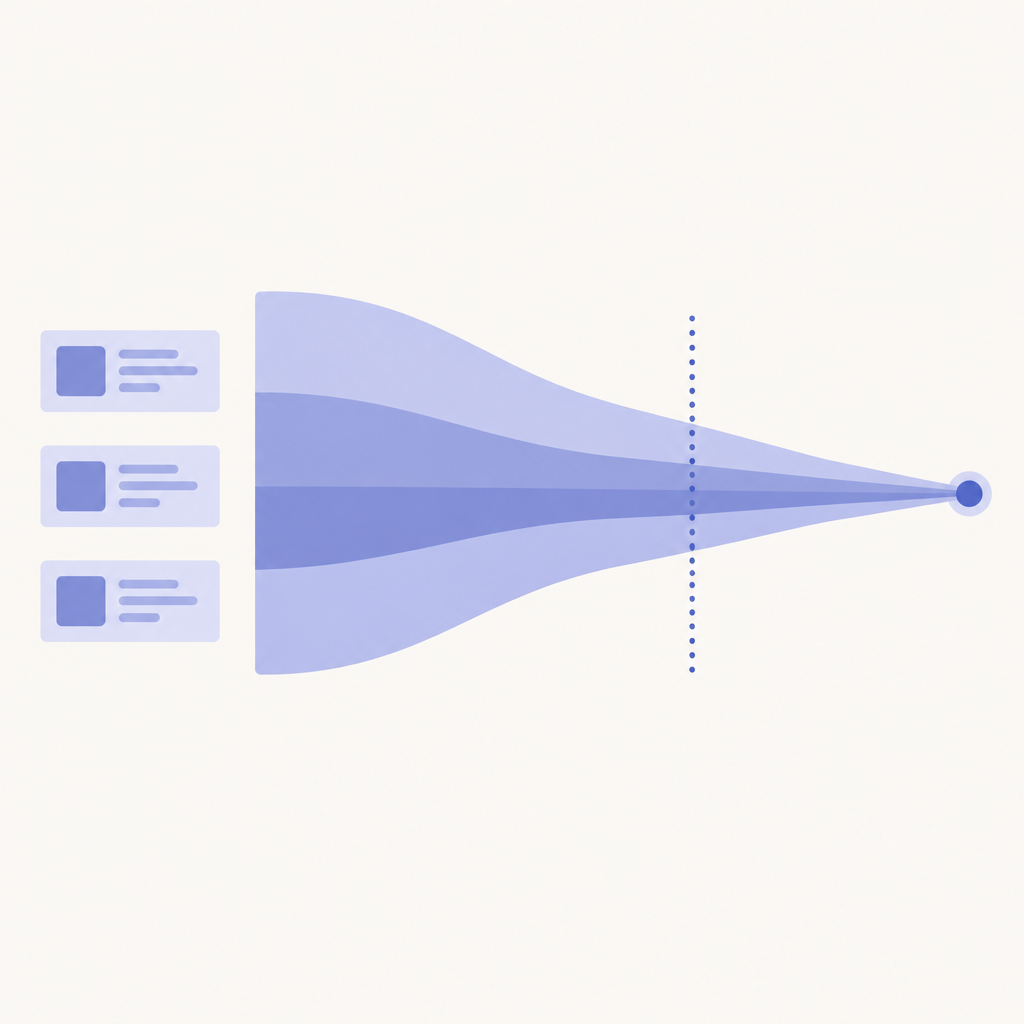
Sequence: dry, then scoped, then full. Run the migration with no writes first, if the tooling allows; then against one bounded slice; then the whole set. The scaled sequence turns "I believe the condition is right" into "I watched the condition hold on a thousand records" before the point of no return.
Communicate around the run, not after. Users should know a maintenance change occurred: what period it covered, what could not be edited momentarily, and how to flag anything odd. A quiet migration produces quiet confusion later — user reports of something-off that get diagnosed as bugs for days before anyone connects them to the data change. A short notice and a post-run note cost two sentences and prevent that week.
Verification is evidence, not a spot check
The standard small-team verification — pull up one record, looks fine, close the laptop — catches catastrophes and misses everything subtler. Evidence-grade verification can still be terse:
Counts before and after. Total records, records meeting the new condition, records failing it. The expected numbers should be in the intent paragraph; these three numbers are the primary pass/fail.
The untouched set, verified untouched. The most common migration bug is collateral change: rows that should not have been affected getting a version bump or timestamp change. Count mismatches in the untouched set against the backup: it should be zero, and the one query that proves it is worth writing down even when the result is "0."
The weird cases, eyeballed deliberately. Where the join condition matched unusually (records matching multiple, matching none, blank or extreme values) — inspect a sample of edge cases to confirm they migrated into the state you intended before heading home.
A record of the run itself. Script version, data counts, start and end time, evidence queries, results. The same discipline as the builder's log for features: not for its own sake, but because a future debugging session or a polite third-party question ("which records changed on the 12th?") is answered from the log in seconds instead of a forensic project.
Conclusion
Migrations deserve release discipline: an intent statement, a same-volume rehearsal, a tested checkpoint, a staged run, and evidence that the entire set moved into the intended state — plus a short friendly note. Total cost for a modest migration: under an hour, most of which is the backup and rehearsal you would want anyway the first time this discipline saves you. The team's record is the product; move it like you mean it.
Disclaimer
This article is for general informational purposes only and does not constitute legal, cybersecurity, workforce, or operational advice. BlueVioletApps LLC is an independent company and is not affiliated with, endorsed by, or sponsored by any federal agency, military branch, or government organization. Always validate requirements with qualified professionals and the responsible authorities for your environment.


Comments