The Free Tier Is an Attack Surface: Abuse Economics and Controls for Small Consumer Apps

Executive summary
The free tier exists to lower the friction of trying the product, and it lowers that friction for everyone — including the people who want your compute, your storage, your sending reputation, or your data at zero cost. Signup spam, disposable-account farming, automated scraping, crypto-jacking on free compute, SMS and email fraud through your notification channels, and resale of API keys are all business models that price your free tier exactly as a cost center to exploit. Small teams tend to discover this through the symptoms (a sudden bill, a provider suspension for spam, a data export nobody recognizes) and respond with one-off blocks. This paper frames the free tier as a designed abuse target with its own economics, and lays out a control ladder that scales from the first suspicious signup to a mature abuse program — without destroying the signup experience the free tier exists to provide.
The abuse economy of "free"
Every resource the free tier offers has a resale or exploitation value, and someone has priced it:
Infrastructure farming. Free compute and background jobs are mined for cryptocurrency, password cracking, or proxying. The cost lands on your bill; the value leaves with the abuser.
Channel reputation. Free tiers with email or SMS credits are the cheapest bulk-sending infrastructure on the market. Your domain reputation and your SMS provider account absorb the damage; the first symptom is often a suspension notice, not a traffic graph.
Data harvesting. Public or lightly gated data in the product is scraped at scale for resale, competitive intelligence, or spam targeting. Your real users' experience funds the value of what's taken.
Fraud pipelines. Disposable accounts become the foot soldiers of referral fraud, review manipulation, and marketplace scams, with your signup flow as the factory.
API abuse. Keys on the free tier get resold, rotated, and wrapped into someone else's product until your rate limits — or your invoice — scream.
The economic insight that shapes good defense: an abuser's value per account is usually low, so their model depends on volume and low friction. Controls that raise per-account cost even slightly shift the economics against the abuse while barely touching the legitimate signup who arrives in ones.
The control ladder
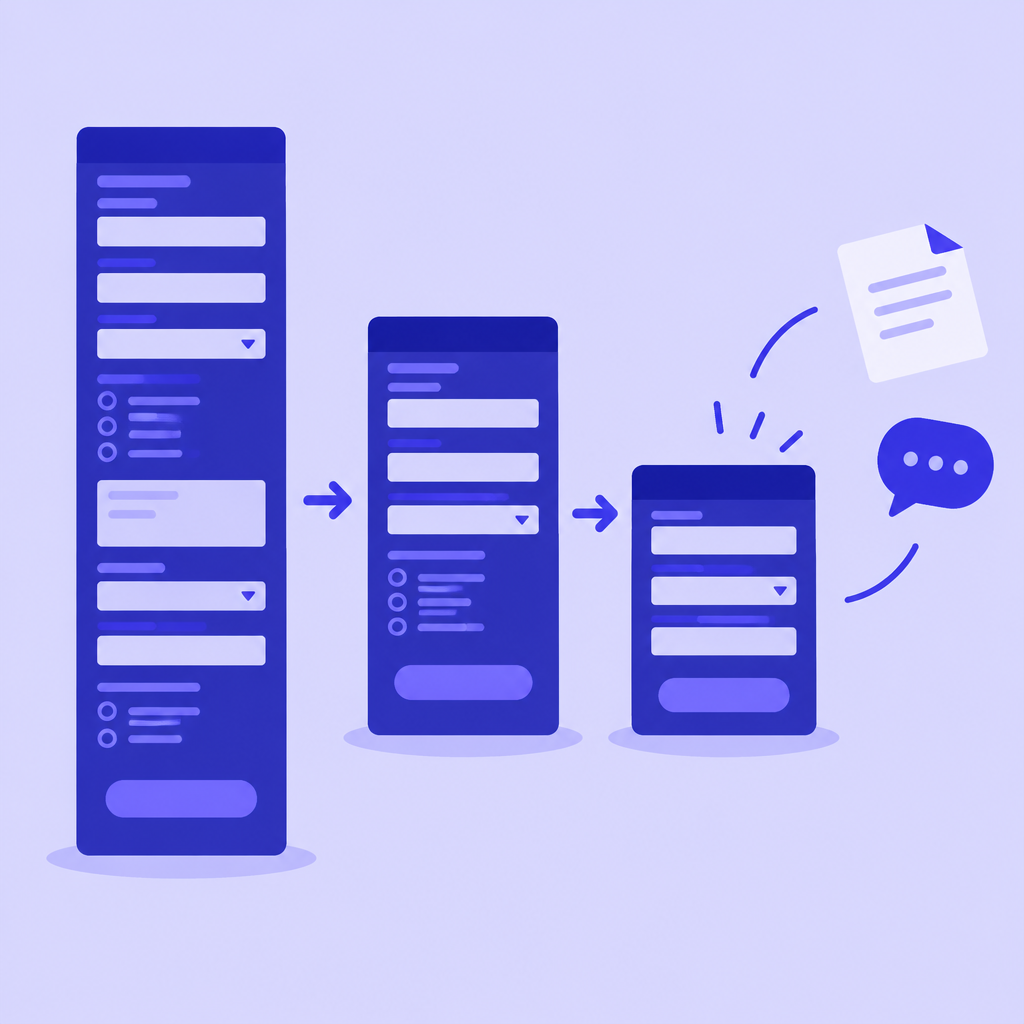
Rung 1 — Cheap friction at the door. Email verification is the floor. Disposable-domain detection and one quiet device or behavioral signal at signup (not an obnoxious captcha wall) eliminate most automated farming at near-zero cost to real users. The design principle: friction that scales with automation, not with humanity.
Rung 2 — Per-account budgets. Hard, small defaults on everything the free tier offers: storage, message sends, background-job minutes, API calls, export size. Not as punishment — as blast-radius control. The abuser who succeeds at rung 1 finds a tier whose maximum damage you chose in advance.
Rung 3 — Velocity and pattern detection. Abuse has a shape: signups from adjacent IP ranges, accounts created seconds apart with template names, one device fingerprints across forty accounts, exports at machine pace. A weekly 20-minute review of a few simple metrics (signups per day, signups per IP, exports per account, send volume) catches most patterns without any detection infrastructure; a handful of rules derived from what you saw automates the ones that recur.
Rung 4 — Tiered response. Not every anomaly deserves an IP ban (shared networks and privacy services make blunt blocks a self-inflicted wound). Build the response menu: challenge the next action, throttle, suspend to a review state, and ban — with the review state as the workhorse, because it converts false positives from "lost customer" into "one verification exchange."
Rung 5 — Paid verification where the stakes justify it. For products whose free tier offers real resource value, a nominal payment-method check at signup (pre-auth, not charge) collapses the abuser's economics almost completely. It costs conversion among legitimate users too — so apply it selectively, at the point where resources are granted, not at the point of curiosity.
Making it a program, not a panic
Three practices turn the ladder into an operating capability. Measure abuse as a product metric — suspicious signups per hundred, flagged accounts per week, abuse-driven cost per month — because what gets measured gets budgeted. Assign the response path in advance (who reviews, who bans, what gets documented) so the second attack is handled by a procedure instead of an evening. And keep the free tier's promise honest on the other side: every control that raises friction should be tested against real signup conversion, because the abuser's goal and your goal share one failure mode — making signup so painful nobody does it.
Conclusion
A free tier is a business decision with a security cost, and the cost is predictable enough to design for. Price the resources you give away, budget them per account, watch the velocity shapes, respond in tiers, and reserve the strongest friction for the smallest set of genuinely valuable endpoints. The free tier's job is to convert honest curiosity into customers — rung by rung, it can do that without also being the cheapest infrastructure on someone else's invoice.
Disclaimer
This article is for general informational purposes only and does not constitute legal, cybersecurity, workforce, or operational advice. BlueVioletApps LLC is an independent company and is not affiliated with, endorsed by, or sponsored by any federal agency, military branch, or government organization. Always validate requirements with qualified professionals and the responsible authorities for your environment.

Comments