Support Triage as a Quality System

Executive summary
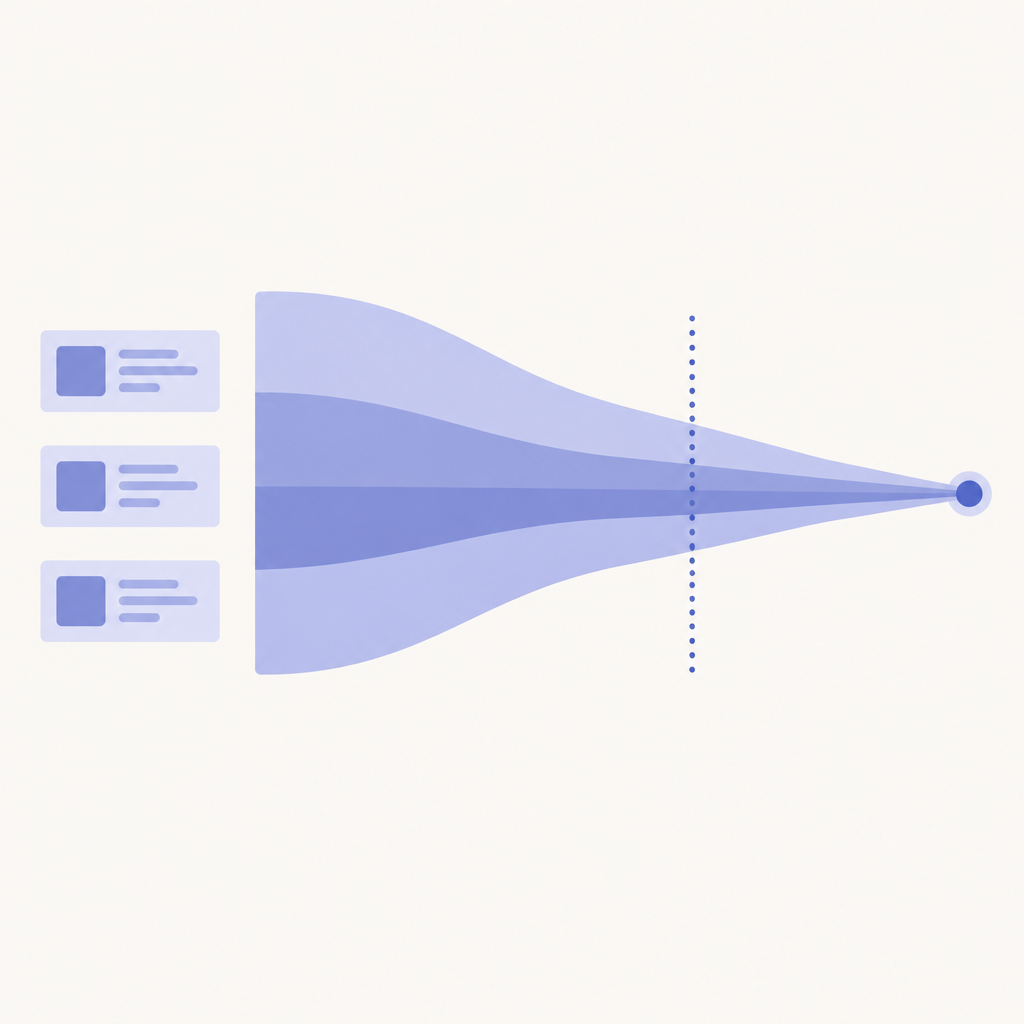
Most small teams read a support queue as a list of problems to close, which discards the most useful signal the product produces. A ticket is evidence about one of four layers: the code, the design, the user's understanding, or the user's awareness that a capability already exists. Label every ticket a defect and every ticket gets a code fix, three layers stay broken, and the queue refills. This paper sets out a triage model that classifies each ticket before anyone opens an editor, what each class should trigger, how the class ratio becomes a product signal, and how the records answer the audit question of whether defects were identified and resolved.
The deckplate gap arrives in the queue
The Deckplate Gap is the distance between what a policy, a slide, or a demonstration says happens and what actually happens at the point of work. Support is where that distance becomes visible, because a ticket is a report from the deckplate: someone met something the design did not anticipate, or misunderstood something the design did not explain.
Treating the queue as a to do list collapses that distance into one number. The number falls while the distance holds, and the same person files an angrier version of the same ticket three weeks later.
Four classes, one label
Every ticket belongs to one of four classes, and the class states where the failure lives.
Defect. The product did not do what its own specification says it does. A calculation is wrong, a permission check is inverted, a record saves without a required field.
Design gap. The product does exactly what it was built to do, and that behavior does not fit the work. The user is not confused and the code is not broken. The model is wrong, or the sequence forces a detour the operator absorbs silently every day.
Training gap. The product is correct and the design is adequate, but this user does not know how to do the thing. This is the largest class in most young products and the most often misfiled.
Already exists. The user asked for a feature the product ships, sometimes three clicks away, sometimes named in the builder's language rather than the operator's.
Why everything gets labeled a bug
The mislabeling is rarely careless. The intake form offers no other word. A severity dropdown captures how much it hurts, not where the fault sits. The word bug also implies the problem belongs to whoever wrote the code, and it is the category that earns engineering calendar time.
The result is predictable. Design gaps get patched in code and return as new tickets. Training gaps get patched in code, adding surface area without removing confusion. The one real defect competes with work that should never have entered the queue.
A triage rubric with four ordered questions
Ask these in sequence, because each excludes the classes below it.
First: does the product's written specification describe the behavior the user saw. If the behavior contradicts the specification, it is a defect and triage ends.
Second: if you watched a competent user do this task today, would the behavior still be wrong for the task. If it matches the specification but not the work, it is a design gap.
Third: can the user perform this task now, given the documentation and screens in front of them. If not, but the capability works, it is a training gap.
Fourth: does the capability exist at all. If it exists, the question becomes why the user could not find it. If it does not, the ticket is a feature request and leaves the flow.
Two rules keep the rubric honest. Never answer the second and third questions from ticket text alone. And never let the code's author be the only classifier of design, because the builder is least able to see the design as a stranger does.
What each class should trigger
The class is only useful if it routes to a different action.
Defect: a fix, a regression test that fails before the fix, and a note on how the defect reached production.
Design gap: a decision record, not a patch. State the current behavior, the work it obstructs, the alternatives, and what would have to be true for the choice to be wrong. Recurring design gaps point to a model never checked against the work.
Training gap: a change to documentation, in product guidance, or onboarding. Then check whether the person who filed the ticket succeeded.
Already exists: a discovery fix. Improve findability, or rename the feature in the operator's words. A capability reachable only through a trained path is, in practice, a capability that does not exist.
Tagging discipline and a controlled vocabulary
Three fields, no more. A class field with exactly four permitted values. A surface field naming where in the product the user was. A first contact field naming how they reached support.
Keep severity separate and never infer it from class. A training gap can be urgent, and a design gap can be minor. Mixing them produces arguments about priority in a meeting that should be about classification.
Classify within one business day and before the ticket closes, because classification at close is a reconstruction and will be wrong. Never silently reclassify: append the correction with a date and a reason. That history makes the ratio trustworthy.
The ratio is the product signal
Track the mix on a rolling eight week window so one strange week does not read as a trend.
A rising defect share means quality is slipping against a stable specification, usually after a release. A rising design gap share means adoption is reaching work the model does not cover. A rising training gap share after a release means behavior changed without the guidance changing. A rising already exists share means the product is demonstrated in a way that sets wrong expectations.
One number matters more than the rest: repeat contact within a class. The same defect twice means the fix was incomplete. The same training gap twice means the documentation change never reached the person who needs it.
The thirty minute weekly review
The mechanism that turns tickets into roadmap evidence is small and recurring. Thirty minutes, same time each week, with whoever writes the code, whoever answers support, and whoever owns product direction.
Read the counts by class first, which takes two minutes. Read the training gap tickets in full, because they are cheapest to act on and most likely to expose a design problem. Flag design gaps that appeared more than once. Then choose at most one change for the week and write the decision down with the tickets that justified it.
The output is one short note: what changed, which tickets drove it, what gets measured next week. That note is roadmap evidence, and it survives staff turnover in a way an argument about priorities does not.
Worked example: ten tickets that looked like defects
One week, ten tickets, all filed in one category and all described by their authors as broken.
Seven concerned a report a regional manager ran every Monday. The numbers were correct. Each user exported it, filtered the export in a spreadsheet, and added two columns by hand, but the report already totalled those columns. Four did not know the totals existed. Three knew and did not trust them, because an earlier rounding problem had been fixed six months before without an announcement. Triage found four training gaps and three already exists cases with a findability cause. The action was one change: the report labels its totals and carries a dated note stating when the rounding fix shipped.
Two tickets described a required field that accepted a blank value. That was a real defect. It was fixed, and a regression test was written that fails without the fix.
The tenth came from a warehouse supervisor who could not record a partial shipment in the order the work happens. The product required the quantity before the label printed; the floor prints first and counts after. The product behaved as specified, so this was a design gap. The decision record reversed the two steps with the label print as the trigger, retiring a tally sheet the floor had kept by hand for eight months.
One defect, four training gaps, three already exists, two design gaps. Six code changes would have been written from the original labeling. The actual result was one code change, one design decision, and one guidance change, and that report produced no tickets over the following eight weeks.
How triage records become audit evidence
Reviewers ask a narrow question: can you show that you identify defects and resolve them, and who decided. A queue of closed tickets answers poorly, because a closed ticket with no classification shows effort, not analysis.
Triage records answer directly. The class field shows a finding was analyzed rather than acknowledged. The correction history shows classifications were revisited when evidence changed, which is what a review of audit records looks for. Each design gap carries a decision record, each defect carries a regression test reference, and repeat contact shows whether resolution held.
This maps onto the review, analysis, and reporting expectations in the AU family of NIST SP 800-53 and the flaw remediation expectations in the SI family, without claiming the practice satisfies any specific control.
Conclusion
A support queue is a measurement instrument most teams read as a chore list. Classify each ticket into defect, design gap, training gap, or already exists before anyone writes code. Route each class to its own action, keep three disciplined fields, watch the mix rather than the count, and spend thirty minutes a week turning the queue into decisions with dates. The gap between what the product was designed to do and what happens at the point of work closes only when tickets are read as evidence about which layer failed.
Disclaimer
This article is for general informational purposes only and does not constitute legal, cybersecurity, workforce, or operational advice. BlueVioletApps LLC is an independent company and is not affiliated with, endorsed by, or sponsored by any federal agency, military branch, or government organization. Always validate requirements with qualified professionals and the responsible authorities for your environment.


Comments