Before You Trust a New Data Feed: A Small-Team Vetting and Onboarding Checklist

Executive summary
Small teams onboard new data feeds with a demo, an API key, and optimism. Three months later the feed that was supposed to complete the operational picture is the reason the operational picture is wrong: records arrive late, partial, or silently duplicated, and the downstream system faithfully propagates the damage. This paper offers a two-phase practice for adopting any external data source: a vetting checklist run before commitment, and a parallel-run window before the feed is allowed to be load-bearing. The goal is not skepticism for its own sake — it is converting "we trust this feed" from a hope into a measured decision with evidence behind it.
Why feeds fail in particular ways
Data feeds have a failure signature distinct from other integrations. Feature integrations break loudly — an endpoint changes, an error appears. Feeds fail quietly: volume drops by a third and no dashboard notices because nothing errored; a field silently changes format and half the values parse as null; the provider "improves" their schema on their schedule, not yours. The consuming system does not crash — it records what it is given, which is worse.
The second trap is provider optimism. Everyone's sample dataset is clean, current, and complete in the sales environment. Production feeds have backlogs, weekend gaps, deduplication quirks, and definitions that don't quite match yours ("active" may mean something different two rows into the contract). None of this is fraud — it is the ordinary difference between a demo and an operation.
Phase one: vetting before the contract
Before committing, get answers — in writing — to a short set of questions that predict most feed pain:
Provenance and definitions. Where does the data originate, how far back does it go, and how does the provider define each field you care about? Field-definition mismatches are the number one silent killer: you think you agreed on "active inventory" and it turns out both sides were right about two different things.
Freshness and delivery cadence. What is the committed update frequency, the measured (not promised) lag from real-world change to feed availability, and what happens to records the provider doesn't yet know about? A feed that is thorough but two days stale may be fine for reporting and dangerous for operations — know which one you are buying.
Completeness and change behavior. Is the feed authoritative (claims to be the whole truth) or contributory (one input among several)? And when the provider fixes an error — a misattributed record from last month — does the correction flow downstream, or does the version you already consumed stand forever? Unannounced retroactive changes have destroyed more downstream trust than outages.
Contractual shape. What happens on provider downtime, planned or otherwise? Are historical corrections communicated through an explicit change record? What happens to you if the feed ends? These determine your fallback obligations and the operational procedures you design later.
Access and security shape. How are credentials issued and rotated, what rate limits apply, and how does the provider behave when you pull a large backfill? Each of these shapes what lands in your runbook later.
Phase two: the parallel run
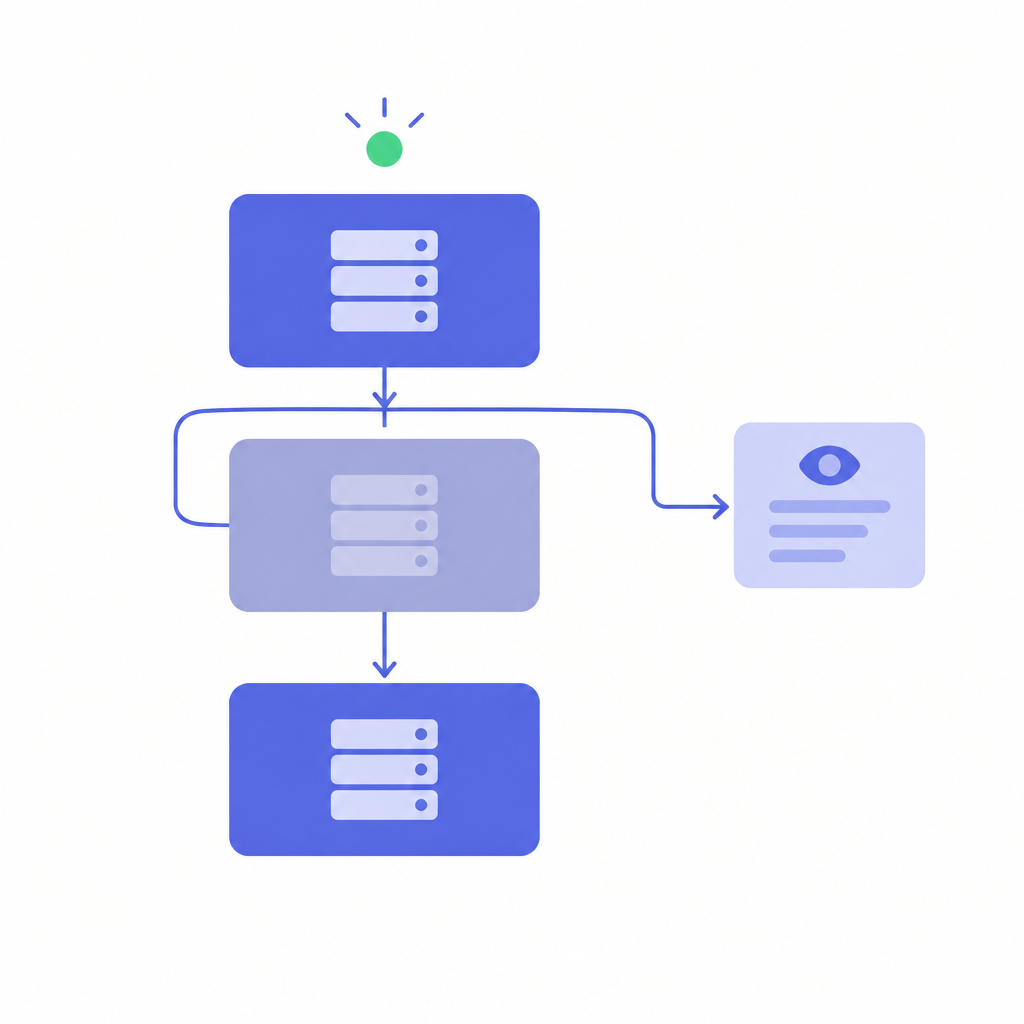
The feed goes live into a parallel channel — never straight into production reasoning. For two weeks the new feed runs alongside whatever source it complements or claims to replace, and a daily automated comparison measures the disagreements on four axes: volume, freshness, accuracy on sampled records, and duplicate rate. This comparison is where marketing claims meet operations. Expect the feed to be better somewhere and worse somewhere; the numbers tell you what changes you actually need downstream, not what the demo said you would.
The parallel window ends with a written go/no-go: coverage versus gaps, the measured values for each axis, and a fallback plan and trigger. What passes goes into production at a defined trust level: what it forwards, what it cannot be used for yet, and the monitoring that watches its health forever after — volume baselines, freshness checks, duplicate counters, and above all a "consumed but suspicious" way to mark records for later re-checking.
After the cutover: trust is maintained, not granted
Trust in a feed is not a one-time decision but a continuously monitored condition: automated checks against its four measured axes, monthly review of the provider's change notices — which should have been engineered into the contract, but if the provider doesn't announce changes, your monitoring becomes the announcement — an annual re-vetting pass (definitions drift on both ends), and an exit plan refreshed enough to be executable. None of this is heavy tooling: a monitoring script and a review calendar keep the feed within its measured bounds, and the small operational cost buys the ability to say "our sources are continuously verified" and prove it.
Conclusion
Data feeds become part of an operational record the moment they are trusted, so the decision deserves a designed gate with the same seriousness as a new hire. Vetting questions pin down definitions, freshness, and change behavior before the contract; the parallel run measures the truth of the answers before the cutover; and permanent baseline monitoring keeps the trust justified after the relationship ages. A feed onboarded this way is slower by two weeks and safer forever.
Disclaimer
This article is for general informational purposes only and does not constitute legal, cybersecurity, workforce, or operational advice. BlueVioletApps LLC is an independent company and is not affiliated with, endorsed by, or sponsored by any federal agency, military branch, or government organization. Always validate requirements with qualified professionals and the responsible authorities for your environment.

Comments