Operational Ownership for Data That Crosses Organizational Boundaries

Updated: Oct 27
Executive summary
Operational records rarely stay inside the organization that created them. A maintenance log becomes a compliance artifact for a customer; a readiness report feeds a partner's dashboard; inventory data flows from one system into another and back. Each crossing is also an ownership crossing, and the question of who is responsible for the record's accuracy, correction, and consequences is usually answered only after something goes wrong — when two organizations discover they had different assumptions. This paper defines a responsibility model for cross-boundary operational data: explicit rules for producers, stewards, and consumers, and a correction path that survives the journey from one organization's system to another's decision.
Why boundaries break ownership
Inside one organization, data ownership is informal but continuous — somewhere, a team that understands the record exists. A boundary changes the physics. The organization receiving the data can see the records but not how they were made; the organization producing the data cannot see how the records are used. The crossing itself introduces transformations — mapping, renaming, re-formatting — each of which is a place where meaning silently changes hands.
The failure pattern is consistent: both sides assume the other owns the problem. The consumer assumes produced data is authoritative and validated; the producer assumes consumers verify fitness for their use. Neither assumption is written down, and their collision is discovered when a correction is needed, an incident is investigated, or an audit asks who attests to the record. By then, the answer requires archaeology: which system held the value, which transformation ran, whose decision the record reflects.
Four roles that must be explicit
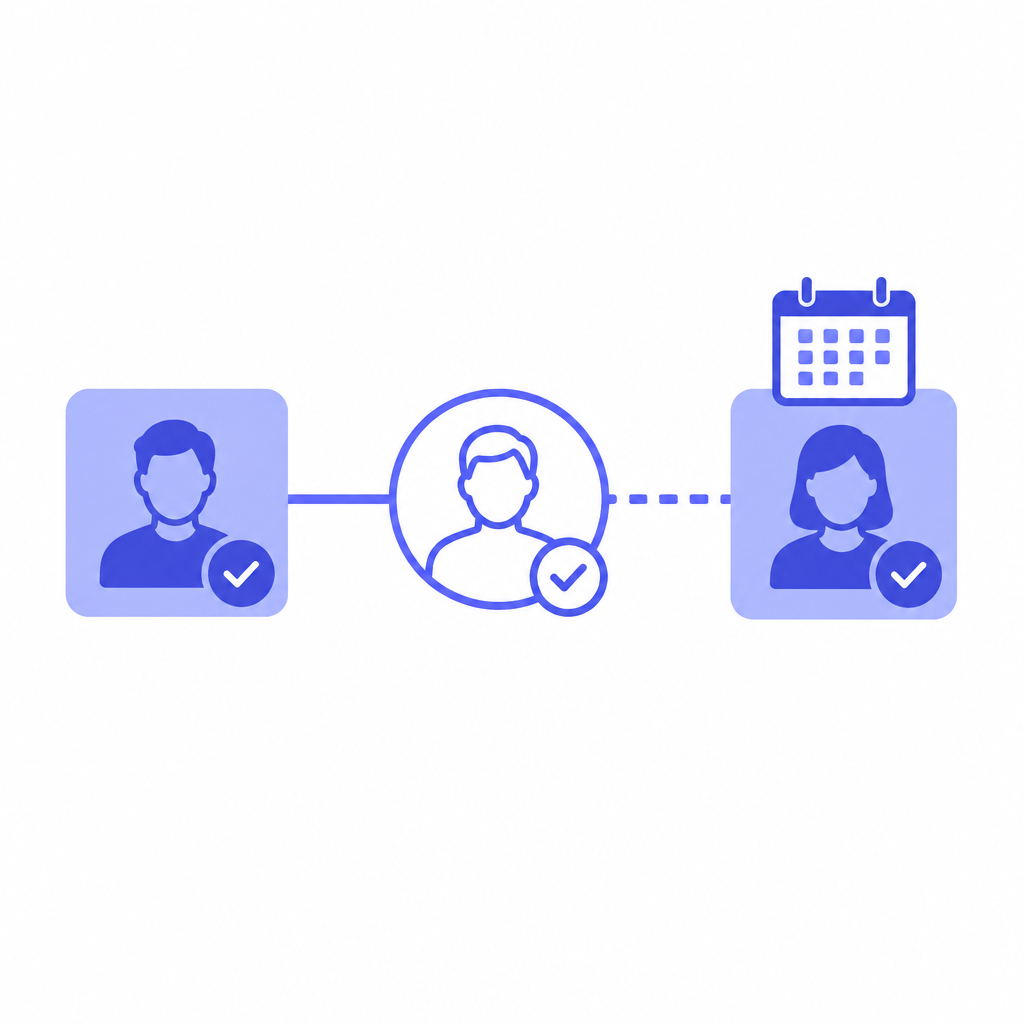
The model assigns every cross-boundary data flow four named responsibilities. A role can be held by a team or a person, but it must be written down — implicit roles do not survive boundaries.
Producer: the source of truth. The producer owns what the record claims at the moment of creation: accuracy, timeliness, and the metadata that makes the record interpretable — what it measures, when, under which conditions, with which confidence. The producer's core obligation is honesty about limits: a record shipped without its freshness and provenance is a claim shipped without its evidence.
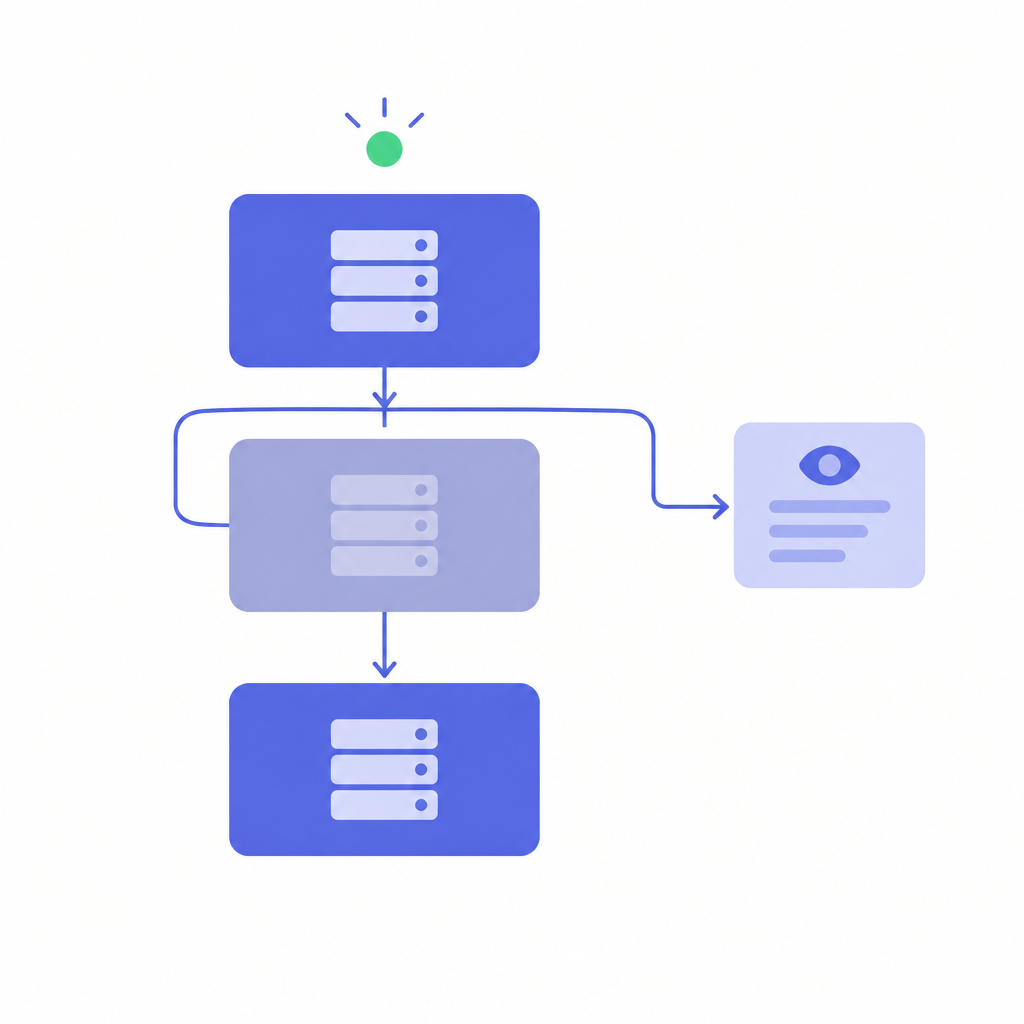
Steward: the transformer. Whoever moves, maps, or re-formats the data between systems owns fidelity of transit. The steward's responsibility is the transformation contract: documented mappings, error handling for values that do not map, and a trace connecting each delivered record to its upstream source. When a stakeholder later asks "is this the same number the other system holds?", the steward is the only party positioned to answer.
Consumer: the interpreter. Whoever acts on the data owns the interpretation: verifying fitness for their specific decision, understanding the record's provenance well enough to reason about its limits, and feeding back discovered errors rather than working around them. The consumer responsibility that crosses boundaries most poorly is the feedback loop — inside an organization, a suspected data error becomes a conversation; across one, it becomes silence and a local workaround.
Corrector: the shared path. The model requires one named correction path from every consumer-visible error back to the producer, with defined response expectations at each hop. Without a designed correction path, each organization invents one at incident time, and the invented paths disagree — which is how a two-week fix becomes a two-quarter dispute.
The boundary contract: one page per flow
For each recurring cross-boundary flow, one page states: the four roles and who holds them (including contact, not just team name); the contract of the exchange — format, freshness expectations, and what the data explicitly does not cover; and the correction path with response expectations. The page is deliberately short because its purpose is to be found and used at the moment of failure, when nobody has patience for a framework document.
The page's most valuable section is what the data does not cover: "this feed reflects completed actions only, not scheduled ones" or "timestamps are local to the source site." Unstated exclusions are where cross-boundary trust quietly erodes, because the consumer discovers them only when an exclusion costs a decision.
Governance that operates at crossing points
Rather than auditing data everywhere, audit the crossings. Three checks per boundary: when the producer's upstream definition changes, does the flow's contract get re-examined — or discover the change through incorrect data? Hand the steward a record unknown to the mapping and observe the result — failure with an alert, or silent truncation? Pick a consumer-visible error and walk the correction path: how long before the producer knows? These crossing-point probes find the defects a purely internal audit never will.
Conclusion
Data that crosses an organizational boundary crosses out of informal ownership. Name the four roles per flow — producer, steward, consumer, corrector — put a one-page contract at each crossing, and audit the crossings themselves rather than the systems on either side. Most cross-boundary data disputes are not about bad data; they are about unstated ownership, discovered too late by both parties at once.
Disclaimer
This article is for general informational purposes only and does not constitute legal, cybersecurity, workforce, or operational advice. BlueVioletApps LLC is an independent company and is not affiliated with, endorsed by, or sponsored by any federal agency, military branch, or government organization. Always validate requirements with qualified professionals and the responsible authorities for your environment.

Comments